
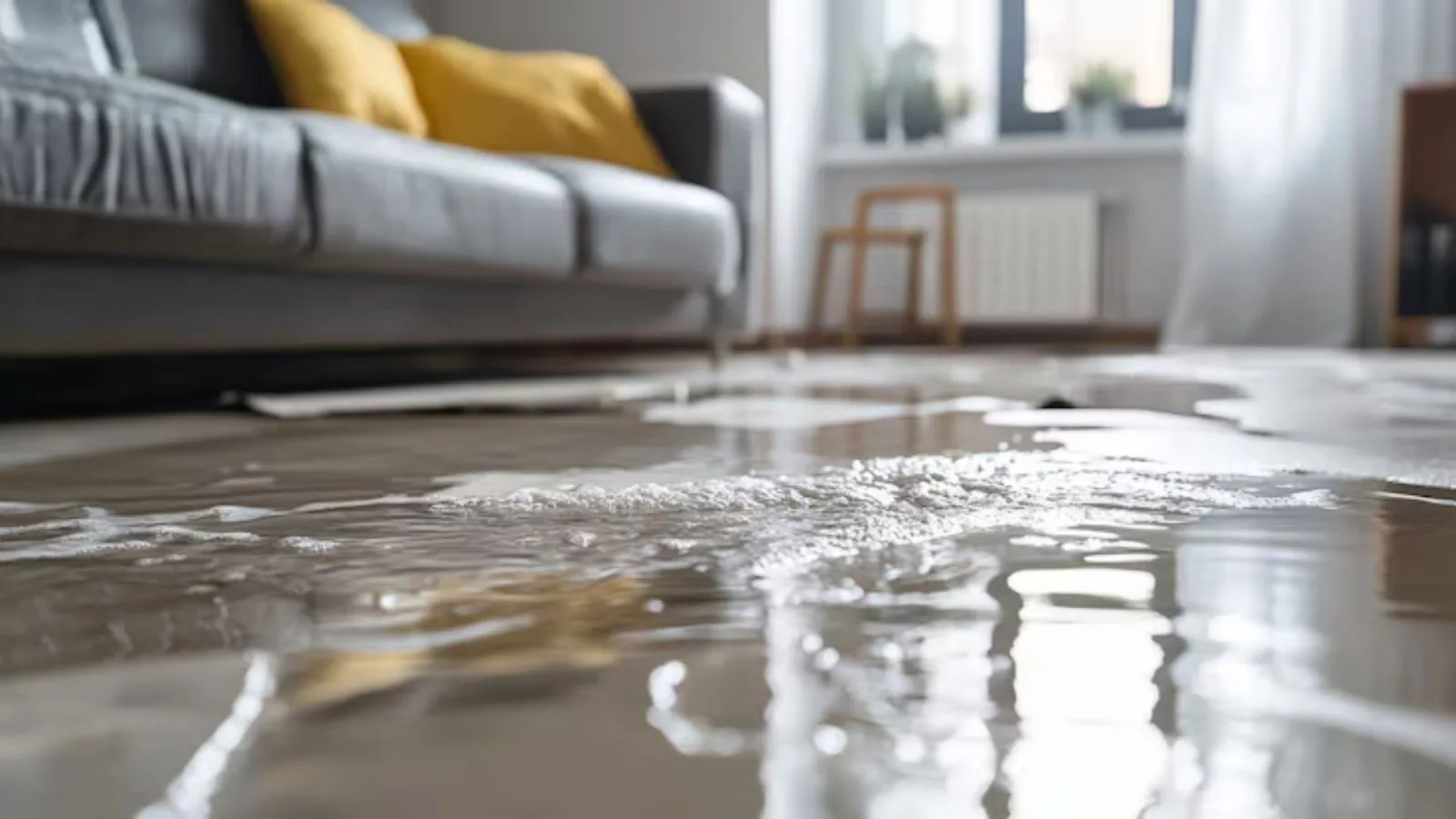
Flood damage cleanup in Decatur starts with safety, because water from a river, creek or storm runoff carries soil, bacteria and chemicals. We remove the water, strip materials that cannot be saved and dry the structure. Our line is answered 24/7, and crews go out that same day when a crew is open.
This page is about rising and surface water. A broken pipe is covered on the burst pipe page, and wind and rain through the roof on the storm damage page.
Flooding in Decatur: when water is an emergency
If water is rising or standing in your living space, leave the lowest level first. Do not walk through flood water, since it can hide debris and live electrical hazards. Call your electric utility if the water reached outlets or the meter.
Get people and pets out
Move to higher ground and keep children away from the water. Do not drive through flooded roads.
Do not touch electrical
Stay away from panels, outlets and appliances in or near water. Call 911 or your electric utility for any hazard.
Document the high-water line
Photograph the water level on the walls before it falls. It shows how much was affected.
Call us when it is safe
Once the water stops rising and the area is safe, we can start extraction and assessment.
Water stopped rising?
Call when it is safe and we will assess the damage.
Tennessee River flood stages at Decatur
The National Weather Service tracks the Tennessee River at a gauge in Decatur. Its stages are 7.5 feet for action, 9 feet for minor flooding, 12 feet for moderate and 14 feet for major. The action and minor stages were lowered in August 2022 after field surveys with Morgan County Emergency Management and the Tennessee Valley Authority.
The service notes that backwater flooding upstream of the gauge can force the evacuation of more than 200 campsites at Point Mallard Campground when the river reaches 9 to 10 feet. If you live near the water, the practical step is to sign up for NWS alerts and know your own flood risk.
Flood water categories and what we do
Flood water is generally treated as Category 2 or Category 3 under the ANSI/IICRC S500 standard. That affects what stays and what goes. Porous materials such as carpet, pad, insulation and some drywall are removed after contact with contaminated water.
Hard surfaces are cleaned and disinfected. We use extraction units and pumps, air movers, LGR dehumidifiers and moisture meters, and document each step in writing.
| Material | After flood water | Why |
|---|---|---|
| Carpet and pad | Usually removed | Holds contamination and cannot be cleaned reliably |
| Drywall and insulation | Cut and removed where wet | Wicks water upward and traps contaminants |
| Hardwood and laminate | Case by case | Depends on water depth, time and moisture readings |
| Concrete and tile | Cleaned and dried | Hard surfaces can be sanitized |
| Appliances and electronics | Evaluated by a technician | Safety and hidden damage |
Flood insurance and your policy
The Alabama Department of Insurance notes that flooding is not typically covered through most homeowners and renter policies. Flood coverage is bought separately, often through the National Flood Insurance Program, which has a 30-day waiting period in most cases. NFIP coverage can reach $250,000 for a home structure and $100,000 for personal belongings.
Check your policy now, not after a storm. Photograph damage, report the loss promptly and ask your insurer about notice deadlines.
What moves the price of flood cleanup
Water category
Contaminated flood water adds protective equipment and disposal.
Depth and square footage
Ankle-deep water in one room is a different job than a lower level under a foot of water.
Materials removed
Carpet, pad, drywall and insulation removal take labor.
Time since the water came
Delay can add mold risk and a wider scope.
Drying and rebuild
Several days of drying equipment and later repair work are priced separately.
Your quote for flood damage cleanup follows what the meter reads in your walls. Call (256) 667-9078 to get it started.
Flint Creek, Wheeler Lake and your property
Flint Creek runs into the Tennessee River at Decatur, and its water level on the lower end is strongly affected by Wheeler Lake. Dry Branch is another named tributary. When the lake is high, creek water has nowhere to drain and backs up into lower lots.
The City of Decatur Building Department enforces floodplain management regulations. Before you rebuild after a flood, ask whether your repair has floodplain requirements, and check the FEMA Flood Map Service Center for your address. Related work on lower levels is covered under basement water damage cleanup.
Flood Damage Cleanup questions answered
Do you handle flood emergencies at night or on weekends in Decatur?
Yes. Our line is answered 24/7. We dispatch crews that same day when a crew is open. Where roads are flooded or conditions are unsafe, we will tell you what we can do and when.
Is flood damage covered by homeowners insurance?
Usually not. The Alabama Department of Insurance says flooding is not typically covered under most homeowners and renter policies. Flood coverage is bought separately, so check your policy or ask your agent.
Can flood-soaked carpet be saved?
Usually not. Carpet and pad that have been soaked by contaminated flood water are generally removed. Hard floors and some solid materials can be cleaned and dried.
How long until mold becomes a concern after a flood?
Mold can begin to grow within about 24 to 48 hours on wet materials. That is why fast extraction and drying matter. Ask your physician about health questions.
What is the difference between flood damage and storm damage?
Flood damage is rising or surface water entering from outside. Storm damage is wind, rain and debris damaging the building envelope. Both may happen in the same storm, and your insurance may treat them differently.