
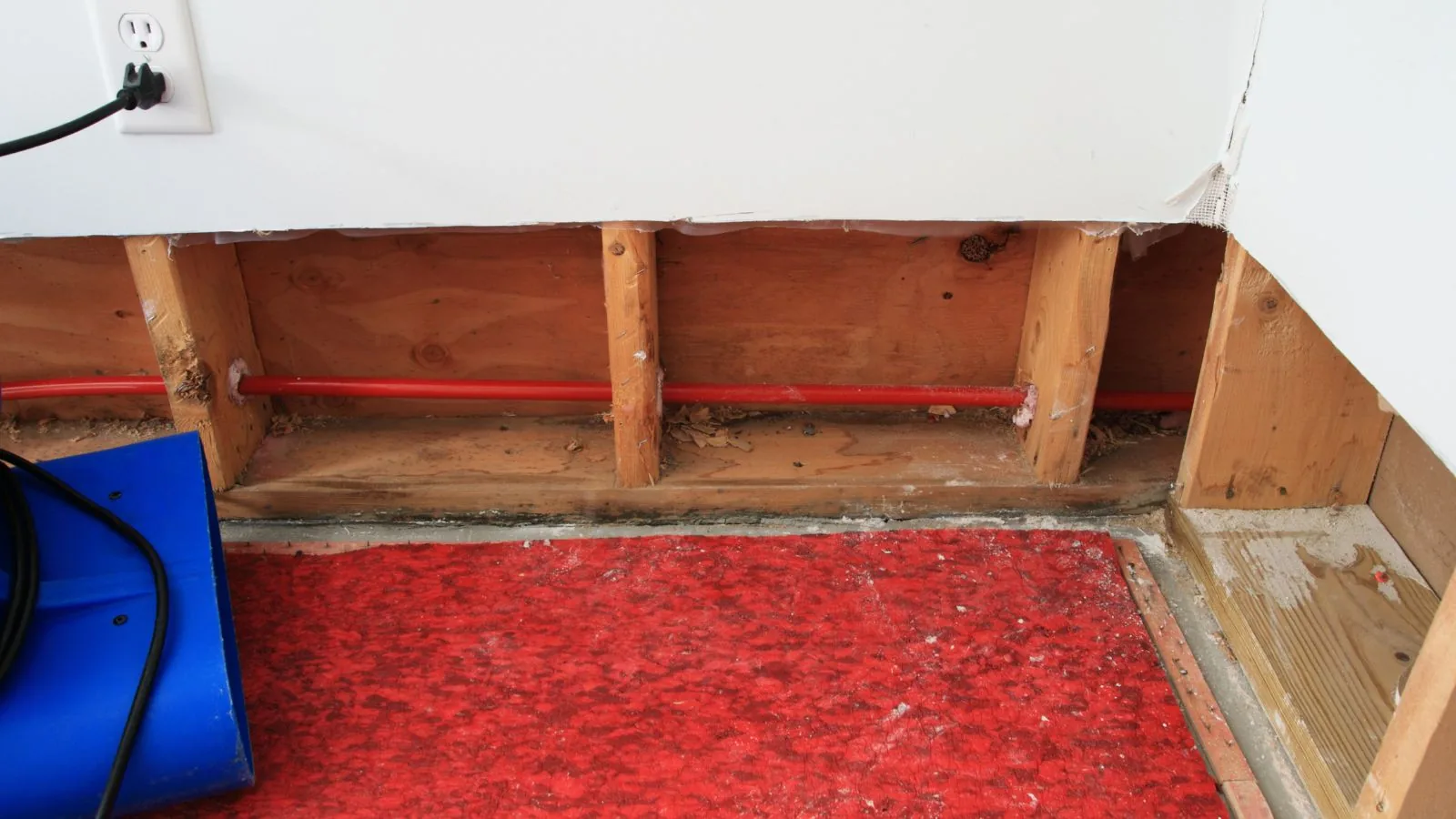
Structural drying and dehumidification in Decatur is the controlled removal of moisture from building materials after water damage. It is also called water mitigation. Air movers, LGR dehumidifiers and moisture meters do the work over several days, and the readings guide it. Our line is answered 24/7 for active water losses.
If water is still standing, start with water extraction. This page explains what happens next and why drying equipment runs for days.
My walls feel damp but there is no puddle
Wet walls, a musty smell and a floor that feels cool or soft often mean water is trapped inside the structure. Drywall, framing, subfloor and insulation hold moisture long after the surface looks dry. That hidden water causes swelling, staining and mold risk if it stays.
Drying is the step that turns a wet building back into a dry one. It is a trade term, but the idea is simple. We find where the water went, set equipment to pull it out and measure until it is gone.
Not sure where the moisture is?
Call us and we will check with meters.
Moisture mapping and how we measure
We start with a moisture map. Moisture meters read wood, drywall and concrete, and thermal imaging shows cool, wet areas behind surfaces. We record readings on a sketch so the crew knows where to place equipment, and so a later reading can show progress.
A reading is compared to a dry standard, which is a reading taken from similar unaffected material in the same building. Drying goals are met when wet materials match that standard, not when they merely feel dry.
The equipment and what each piece does
Air movers push air across wet surfaces to speed evaporation. LGR dehumidifiers pull that moisture out of the air so it does not settle back. Specialty drying systems push warm air into wall cavities and under floors.
The two work together. Fans without dehumidification can push humid air around the building, and dehumidifiers without airflow dry slowly. Setup depends on room size, material and the humidity of the day.
| Equipment | What it does | Where it is used |
|---|---|---|
| Air movers | Moves air across wet surfaces | Floors, walls, ceilings |
| LGR dehumidifiers | Removes moisture from the air | Sealed drying areas |
| Moisture meters | Read moisture in materials | Every visit |
| Thermal imaging camera | Shows temperature differences from wet areas | Initial survey and checks |
Water mitigation and how long it takes
Drying typically takes several days, and thicker materials such as hardwood and concrete can take longer. We check readings each visit and adjust equipment. The job is done when the readings say so, not when a set number of days has passed.
The ANSI/IICRC S500 standard describes the principles of structural drying, and you can ask any company whether its crews work to it. After drying, repair work such as wall and drywall repair restores the finishes.
Insurance and drying
Insurers often ask for drying logs and moisture readings to show the work was needed. We keep daily records and share them with you for your claim. Check your policy for how mitigation costs are treated, or ask your insurer.
Equipment rental alone does not replace a drying plan, and we do not offer equipment rental. The readings are what matter.
What affects the cost
Affected area
More wet square footage means more equipment.
Material thickness and type
Concrete, thick framing and hardwood dry slowly.
Humidity of the day
Wet outdoor air slows drying.
Number of drying days
Equipment is typically priced per day of use.
Monitoring visits
Daily readings add labor.
To price structural drying for your home, call (256) 667-9078. Say where the water came from and how long ago.
Drying in a humid Tennessee Valley summer
Decatur summers are hot and humid, which makes drying harder, because dehumidifiers have more moisture to remove and doors and windows cannot be opened to help. In the cooler months, indoor humidity is easier to control.
Drying with the building closed, and running the air conditioner as directed, helps. Do not turn the thermostat to its lowest setting, and do not open the home while equipment runs unless the crew asks you to.
Structural Drying questions answered
Do you offer drying outside of emergencies?
Yes, drying begins as soon as water is extracted, but we can also assess damp materials after a slower leak. Call and we will explain the steps.
How long do the drying machines stay in my home?
Usually several days, depending on materials, humidity and the extent of wetness. We take readings each visit, and the machines come out when the readings reach drying goals.
Why can the equipment be so loud?
Air movers and dehumidifiers run continuously to remove moisture. They are loud, and some customers sleep elsewhere. The drying is worth the noise.
Can I use my own fans and dehumidifier?
They help only a little. Wall cavities and subfloors need controlled drying equipment, and readings that tell you whether materials are dry.
What is the difference between drying and mold remediation?
Drying removes moisture so growth does not start. Remediation is a separate process. Ask your physician about health concerns and ask whether your state licenses mold work.