
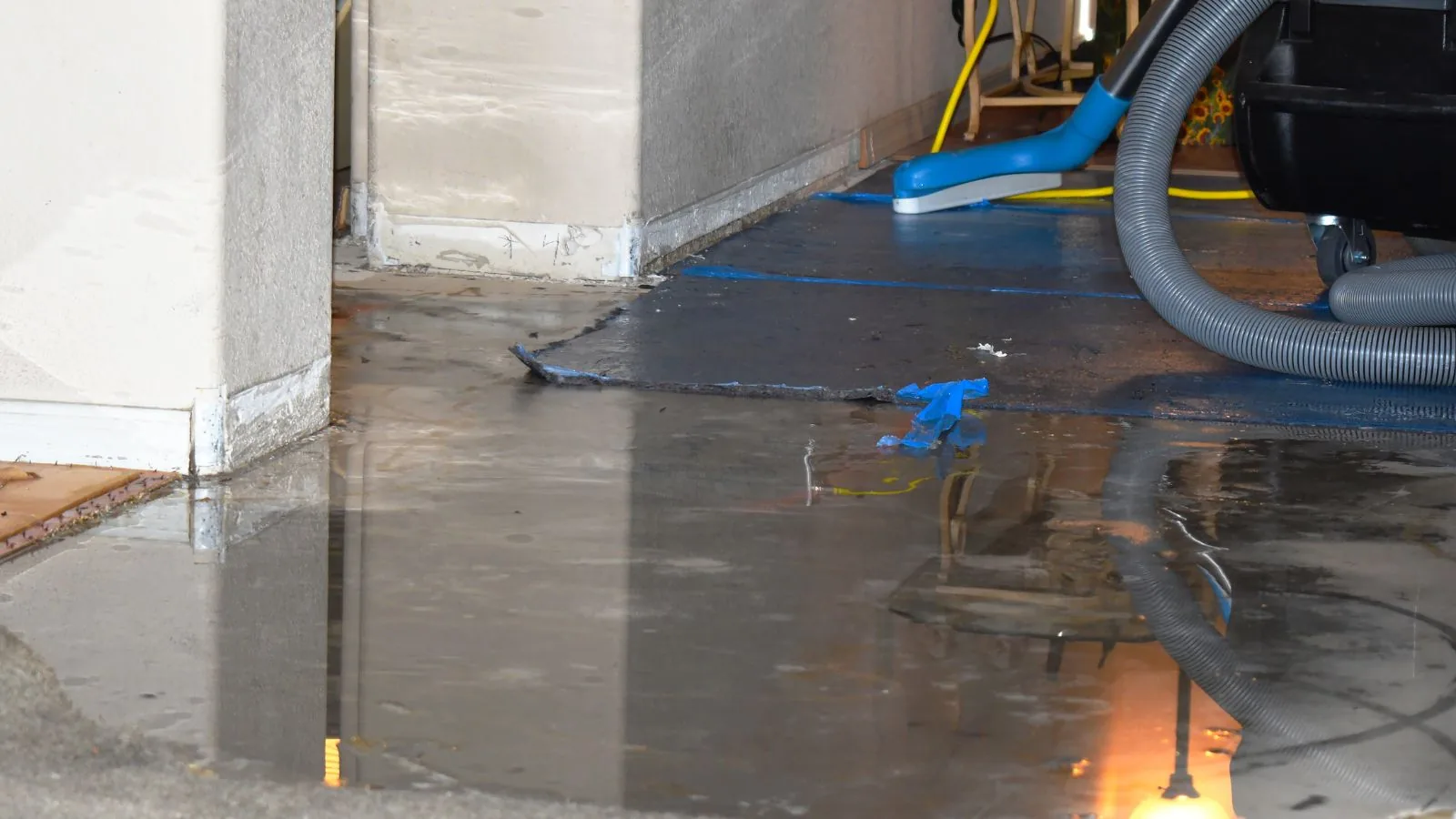
Standing water in a Decatur home or business needs to come out in hours, not days. Emergency water extraction means pumping and vacuuming the water itself, before any drying equipment is set. Our line is answered 24/7, and crews respond on the same day if a crew is free.
Water extraction is the first job in most losses. The pages on structural drying and flood damage cleanup cover what follows. This page is about the water you can see and step in.
When standing water is an emergency
Water that has sat on a floor for more than a day starts soaking into drywall, subfloor and furniture legs. After about 24 to 48 hours the job changes from removing water to removing damaged material too. The sooner the water leaves, the more of the house stays.
While you wait for the crew, work through this short list. It only takes a few minutes and it limits the damage.
Stop the source
Close the shut-off valve on the leaking line, or the main valve at the meter if you cannot find it. Water that keeps arriving cannot be extracted.
Cut power only if dry
Turn off breakers for wet rooms only when you can reach the panel without stepping in water. Otherwise stay out and call your electric utility.
Lift what you can
Move rugs, books, electronics and small furniture onto dry surfaces. Foil or plastic under furniture legs keeps stain from transferring.
Keep people out
Keep children and pets out of the water. If it came from a toilet or drain, treat it as contaminated and do not wade through it.
Water still standing?
Call the 24/7 line and describe what you see.
How we pull water out of a structure
Extraction starts with a quick survey for the water level, the source and the materials involved. Shallow water on hard floors goes first with truck-mounted or portable extraction units. Deeper water, such as a flooded lower level, is moved with submersible pumps and hoses to the outside drain path.
Carpet and pad are different. A weighted extraction wand pulls water up through the carpet, and the pad is often lifted and removed because it holds water that no wand can reach. We check with moisture meters as we go, so the crew knows where water is still hiding behind baseboards and under cabinet kick plates.
Extraction versus drying: where one ends
Extraction removes bulk water. It does not dry the building. Wood framing, drywall and concrete still hold moisture afterward, and that moisture is removed with air movers and LGR dehumidifiers over several days.
The table shows how the two stages differ, so you know what each visit is for.
| Stage | What it removes | Typical tools |
|---|---|---|
| Water extraction | Bulk standing water and saturated carpet water | Pumps, extraction units, wands, hoses |
| Moisture check | Hidden water in walls, floors and cavities | Moisture meters, thermal imaging |
| Structural drying | Moisture held in building materials | Air movers, LGR dehumidifiers |
Insurance and your policy
Sudden and accidental water damage is often covered by a homeowners policy, while gradual leaks and neglect often are not. Flood damage typically falls outside a homeowners policy and needs its own flood coverage. Read your policy or ask your insurer before you assume either way.
Photograph the water and the affected rooms before extraction starts, and keep the photos with your claim. We document the scope in writing so your adjuster has something specific to review.
What moves the price of extraction
Water category
Clean supply water, grey water and sewage are handled differently, and contaminated water adds safety steps and disposal.
Depth and area
A damp 200 square foot room and a flooded lower level are very different amounts of pumping and labor.
Materials affected
Carpet and pad, hardwood, drywall and insulation each need their own treatment after the water is out.
Access and time of day
Tight crawl access, long hose runs and night or weekend dispatch all change the job.
Drying that follows
Extraction is usually the start. Structural drying days and equipment are priced separately.
Ask about water extraction at (256) 667-9078. A short description of the water and the rooms is enough to start.
Where the water goes after a storm in Decatur
The northern part of Decatur sits on a short hill that drops steeply to the river at Rhodes Ferry Park. The hill runs about 1.5 miles south to the 14th Street and Magnolia Street area near US 31, and the land south of there is flat. Flat ground drains slowly, so after a heavy rain a low lot or a basement stairwell there can hold water that a sloped lot would shed.
That is why we ask where the water entered. Water that came through a door threshold, a window well or a floor drain points to different fixes. If a drain or the public sewer is part of it, see our page on sewage backup cleanup before touching anything.
Water Extraction questions answered
Do you handle water extraction emergencies at night or on weekends in Decatur?
Yes. Our dispatch line is answered 24 hours a day, including nights, weekends and holidays. A crew is sent on the same day if a crew is free, and we tell you plainly when a wait is likely.
How soon does standing water need to come out?
As soon as possible. Water soaks into drywall, subfloor and furniture within hours, and the risk of mold growth rises after about 24 to 48 hours. If you cannot reach us right away, stopping the source and lifting valuables helps.
Is water extraction the same as water damage restoration?
No. Extraction is the first stage and removes bulk water. Restoration also covers drying, removing damaged materials and rebuilding. Many jobs start with extraction and continue into structural drying.
Can you extract water from carpet without removing it?
Sometimes. Clean water caught quickly can often be pulled out of carpet, but the pad underneath is usually replaced. Water that sat longer or came from a contaminated source means the carpet goes too. Moisture readings decide it.
What should I do if water is near electrical outlets?
Stay out of the water and do not touch outlets or cords in it. Cut power at the panel only if you can reach it while standing on dry ground. If you cannot, call your electric utility or 911 before calling us.