
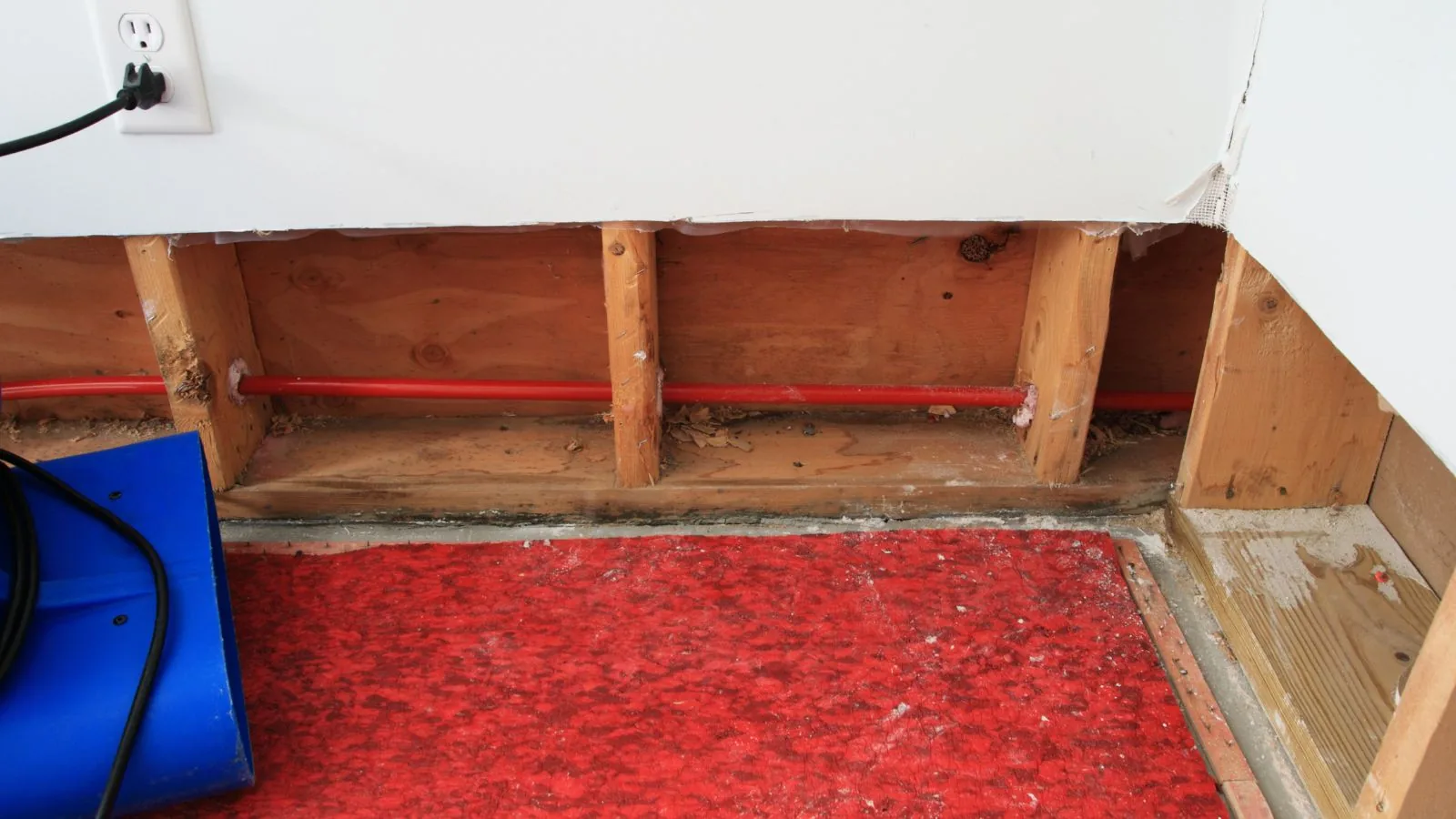
How long does water damage restoration take? It depends on the size of the loss, the materials and the weather. Extraction can finish in hours. Drying commonly takes several days. Rebuild is a separate stage and can take days or weeks. We cannot promise an exact timeline without seeing the job.
Drying is measured by readings, not by the calendar. That is why a fixed number of days from anyone should be treated with care.
The stages in order
| Stage | Typical length | What affects it |
|---|---|---|
| Assessment and moisture mapping | Hours | Size of the affected area |
| Extraction | Hours to a day | Volume of standing water |
| Removal of wet materials | Hours to a day | What cannot be dried |
| Drying | Several days | Materials, humidity, airflow |
| Verification | At the end of drying | Readings reach the target |
| Rebuild | Days to weeks | Scope, permits, materials |
What slows drying
Dense materials such as hardwood, plaster and concrete hold water longer. Trapped moisture in wall cavities, under cabinets and below flooring needs special attention. High humidity outside slows evaporation.
Alabama summers are humid, so dehumidifiers do more of the work. See structural drying and hardwood floor repair for details on slow materials.
What speeds it up
- Starting within hours rather than days.
- Removing materials that cannot dry.
- Opening wall cavities for airflow.
- Keeping doors and windows closed during drying.
- Allowing equipment to run without interruption.
- Following the monitoring schedule.
Why readings decide the end date
Crews measure moisture in the materials and compare it to a dry reference. When the readings meet the target, equipment is removed. Ending early leaves moisture behind, which can warp materials or cause odors.
If a company gives you a fixed end date without readings, ask how they will verify it. A date is a plan, not proof.
Rebuild timelines
Rebuild includes drywall, paint, flooring and trim. Drywall needs time for mud and paint to dry. Flooring may need acclimation. Permits and inspections add time if required.
Supply delays and your insurer's review can also add time. Ask your contractor for a schedule and a plan for changes.
Examples of timelines
| Situation | Drying outlook | Why |
|---|---|---|
| Small clean-water leak on one tile floor | A few days | Few porous materials |
| Burst pipe soaking one room of carpet and drywall | About a week of drying, then repair | Pad and lower drywall may come out |
| Hardwood floor soaked by an appliance | Longer, often a week or more | Dense wood releases moisture slowly |
| Basement after a heavy rain | Longer | More materials and humid air below grade |
| Sewage backup | Cleanup first, then drying | Contaminated materials are removed |
What you can do to help
- Keep the thermostat steady and the doors closed in the drying area.
- Do not turn equipment off or move it.
- Keep children and pets out of the affected rooms.
- Tell the crew about any new stain or smell.
- Save all receipts and logs.
- Ask when the next reading will be taken.
When the end date moves
Drying plans change when readings do. A wall that reads dry on day three may read wet again on day four if moisture is trapped behind trim. The crew should tell you about the change and why.
Extra days are not always bad news. Ending too early can mean warped floors or a musty smell weeks later. Ask for the log, and ask what number counts as dry.
Signs drying is not finished
Cold or damp spots on a wall, a musty smell, cupped flooring and baseboards that feel soft all suggest moisture remains. Ask for new readings if you see them.
Never close walls, install flooring or paint until the crew confirms the readings. Rushing the finish is the most common way a dried structure becomes a new problem.
Why small jobs still need monitoring
Even a small leak can leave moisture in a wall cavity or under a cabinet. A one-day job rarely stays one day if readings show water that the eye cannot see.
Expect at least one return visit to confirm readings, and ask when it will happen. A scheduled check is the cheapest insurance against a repeat problem.
Ask for a schedule in writing
A written schedule lists the extraction date, equipment days, reading visits and a target for the dry check. It is not a promise, but it shows the plan and gives you something to compare against if timing slips.
What Decatur homeowners should know
Decatur sits in the humid Tennessee Valley, and Wheeler Lake and Flint Creek add moisture to the area. Humid outdoor air slows drying, so expect dehumidification to carry much of the load, especially in summer.
The same applies in Somerville and Tanner. After flooding, the flood damage restoration timeline is usually longer, because more materials are involved. Basements add time as well, as covered on basement cleanup.
Planning around the timeline
Ask the crew to explain the plan on day one. Know when equipment will run, when visits will happen and when you can expect an update. Ask what you can do to help, such as keeping the thermostat steady.
Equipment is loud. Plan for noise and for restricted space in the affected rooms.
Decatur questions answered
How long does water damage drying take?
Several days is common, but readings decide. Dense materials and humid weather can take longer.
How long does extraction take?
Often hours to a day, depending on the amount of standing water.
How long does rebuild take?
Days to weeks, depending on scope, materials and permits.
Why does drying take so long in summer?
Humid air holds moisture and slows evaporation, so dehumidifiers do more of the work.
How do I know the structure is dry?
Moisture readings reach the target for each material. Ask for the log.